Olivia Zimmermann · 30 September 2026
Tracking the Expansion of AI Tools in High School Science Experiments
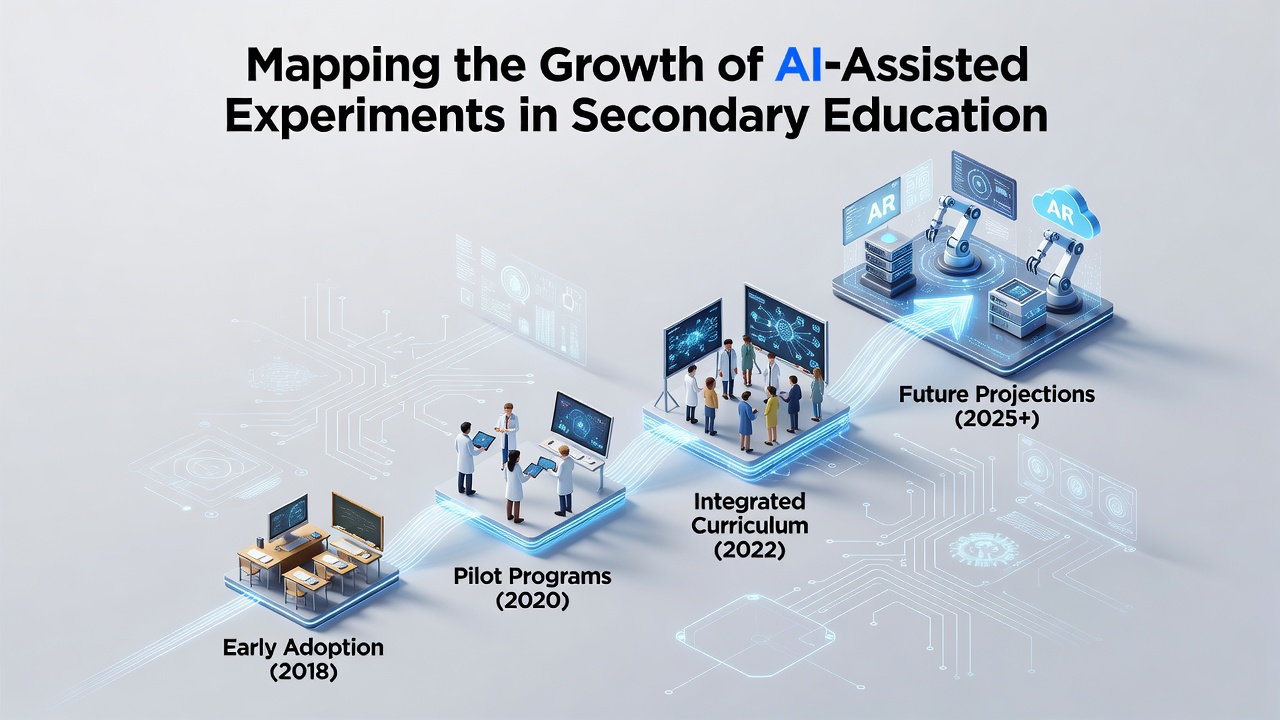
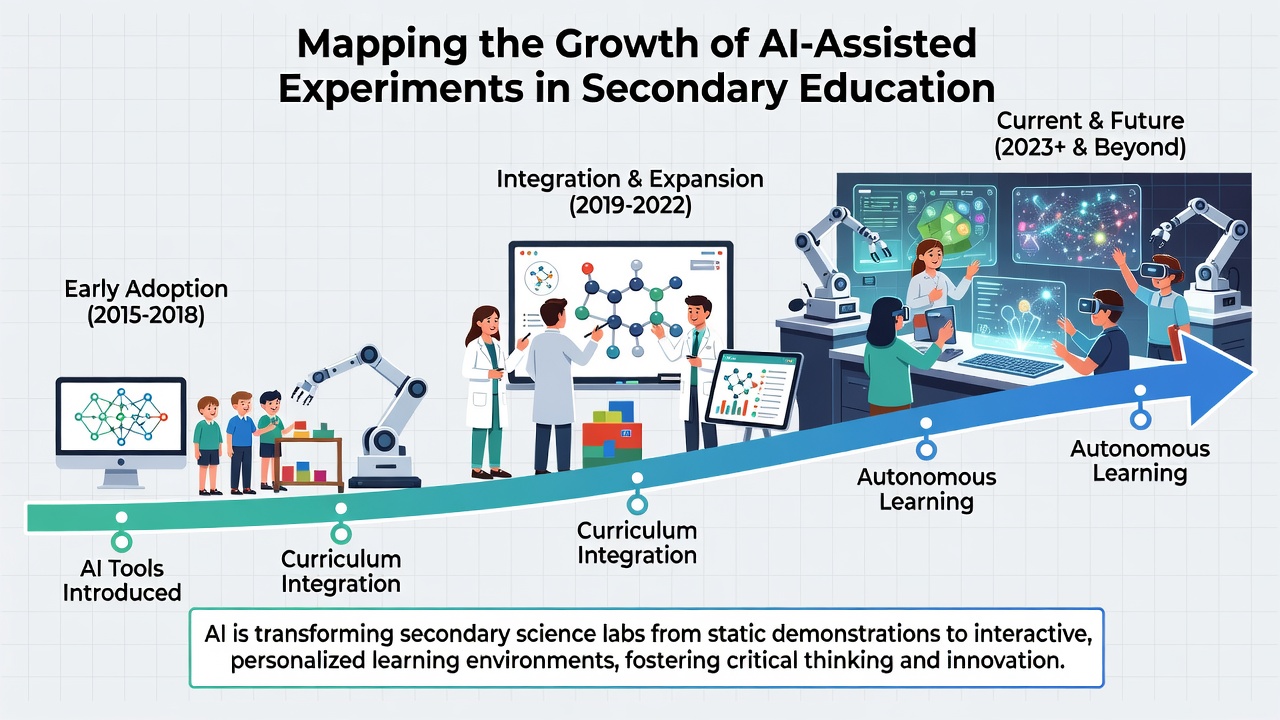
Secondary education systems across multiple countries now incorporate artificial intelligence into laboratory activities at rates that have risen steadily since 2022, according to aggregated enrollment figures from national ministries of education. Schools in the European Union, North America, and parts of Asia report increased deployment of adaptive simulation platforms, automated data-logging systems, and machine-learning interfaces that adjust experimental parameters in real time. These tools allow students to run repeated trials with variable conditions while the software records outcomes and suggests adjustments based on prior results.
Reports compiled by the OECD in 2025 show that 38 percent of surveyed secondary schools in member countries had integrated at least one AI-assisted experiment module into their science curricula by the end of the previous academic year. That share stood at 12 percent in 2022. The same dataset indicates faster adoption in urban districts with reliable broadband infrastructure, while rural schools often rely on cloud-based platforms that require lower bandwidth. Government funding programs in Canada and Australia have allocated specific grants for teacher training on these platforms, which explains part of the measured growth.
Regional Patterns in Adoption Rates
European Commission statistics released in early 2026 list Finland, Estonia, and the Netherlands as the leading countries by percentage of secondary schools using AI-enhanced lab software. In each of those nations, more than half of upper-secondary biology and chemistry classes now include at least one module where algorithms guide hypothesis testing. Meanwhile, data from the U.S. National Science Foundation document similar expansion in 22 states that received targeted federal support for STEM infrastructure between 2023 and 2025.
One longitudinal study conducted by researchers at the University of Melbourne tracked 1,400 students across 14 Australian schools and found that classes using AI-assisted titration software completed the standard practical assessment in 22 percent less time than control groups while maintaining comparable accuracy scores. The study also recorded higher rates of students attempting additional experimental variations when the software highlighted anomalies in real time.
Key Technologies Driving Classroom Integration
Most current implementations rely on three categories of tools. The first consists of sensor arrays connected to cloud services that apply basic machine-learning models to filter noise from student-collected data. The second includes virtual-reality environments where students manipulate molecular structures and receive immediate feedback from embedded predictive models. The third comprises open-source coding environments that let advanced students train simple neural networks on their own experimental datasets.
According to a 2025 industry report from the International Society for Technology in Education, more than 60 commercial and nonprofit providers now market at least one product aimed specifically at secondary-school science labs. Adoption curves show the steepest growth in physics classrooms, where motion-tracking cameras and force-sensor data feed directly into regression algorithms that predict trajectories under altered gravity conditions.
Teacher Preparation and Curriculum Alignment
Professional development programs have expanded in parallel with hardware and software purchases. The U.S. Department of Education’s 2024 guidelines require that any federally funded AI education initiative include at least 20 hours of teacher training focused on interpreting algorithmic outputs rather than on coding. Similar requirements appear in the European Union’s Digital Education Action Plan update published in September 2025. Observers note that schools that combined new tools with structured training reported fewer instances of underused equipment after the first semester of implementation.
Curriculum alignment efforts vary by jurisdiction. Some districts embed AI-assisted experiments within existing national standards for inquiry-based learning, while others treat them as enrichment modules offered after core content is covered. In both models, assessment rubrics now frequently include criteria for students to evaluate the reliability of AI-generated suggestions alongside their own observations.
September 2026 Milestones
September 2026 marks the scheduled release of the next OECD triennial report on digital learning in secondary education, which will contain expanded metrics on AI experiment usage across 38 member countries. Several national education ministries have announced they will publish complementary datasets at the same time, allowing direct comparison of adoption rates and student outcome indicators. Conferences scheduled in Helsinki and Singapore during that month will feature sessions devoted to sharing implementation case studies from the preceding academic year.
Conclusion
Available enrollment, funding, and outcome data indicate continued expansion of AI-assisted experiments in secondary education through the current decade. Regional differences persist, yet the overall trajectory shows increasing numbers of schools integrating these tools into standard science instruction. Future reports scheduled for release in September 2026 will provide updated figures that allow further mapping of this growth across additional countries and school types.