Cameron Hayes · 2 September 2026
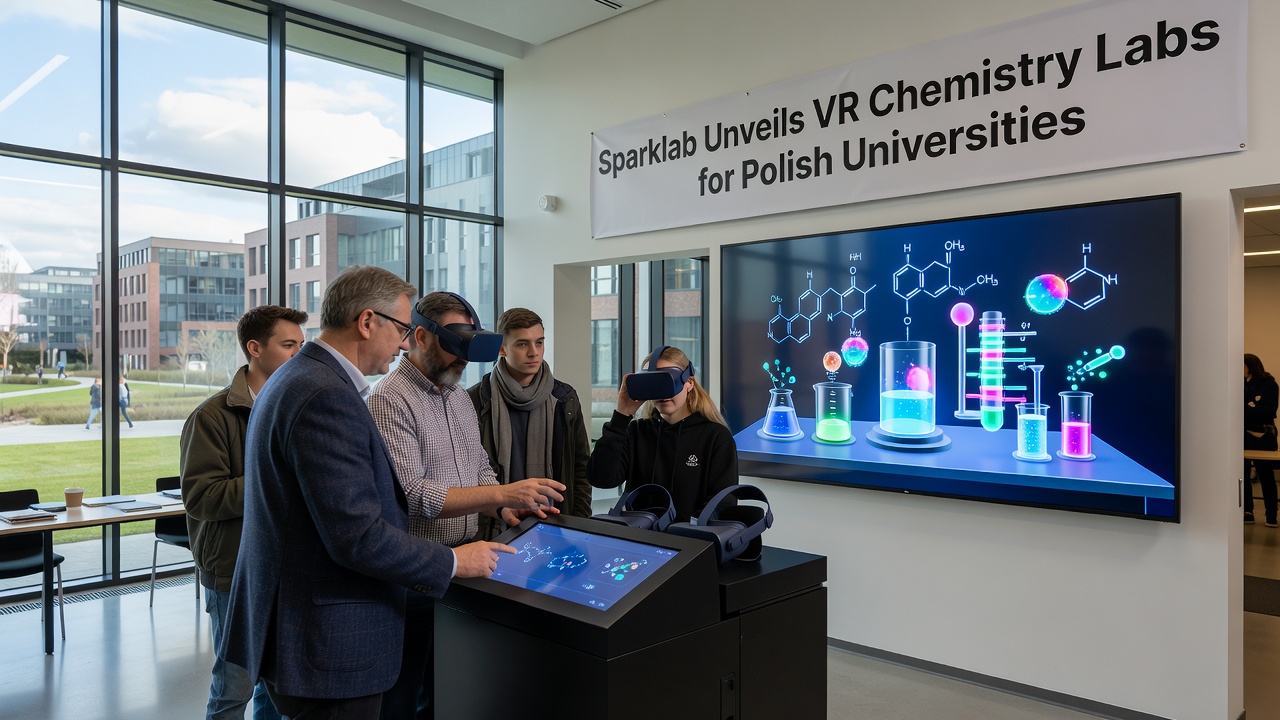
Sparklab Educational Innovation has unveiled a new suite of virtual reality chemistry laboratories intended for integration into the curricula of Polish universities. This development represents a significant step forward in educational technology, allowing students to engage with complex chemical concepts in a safe and controlled virtual setting. The platform addresses longstanding challenges in traditional lab instruction including limited equipment access and safety concerns.
Key Features of the VR Chemistry Labs
The virtual labs include detailed simulations of various chemical experiments such as acid-base titrations, distillation processes, and molecular modeling. Users wear VR headsets to interact with the environment, using hand controllers to handle virtual glassware and reagents. The system provides immediate feedback on procedural accuracy and safety protocols. Multiple universities have already begun testing the platform, reporting improved student understanding of theoretical principles through practical application. The software supports collaborative sessions where students can work together in the same virtual space from different locations. Data from experiments can be logged and analyzed for educational assessment purposes. Furthermore, the labs simulate real-world variables such as temperature fluctuations and equipment malfunctions to prepare students for actual lab conditions. Instructors can customize scenarios to match specific course objectives, making the tool versatile across different levels of study from undergraduate to graduate programs.
Accessibility is a core focus, with options for low-vision users and compatibility with various hardware platforms. Training modules are included to familiarize both students and instructors with the interface.
Educational Impact and Expansion Plans
By reducing the need for physical resources, these VR labs help lower operational costs for educational institutions while minimizing environmental impact from chemical waste. Early adopters note increased student motivation and retention of material. The initiative aligns with national efforts to modernize STEM education in Poland. Sparklab intends to add more advanced topics like quantum chemistry simulations in the coming year and is seeking additional partnerships with research institutions. Evaluations will continue to refine the user experience based on feedback from the academic community. Research indicates that VR-based learning can improve spatial understanding of molecular structures, which is crucial in chemistry. The project also includes analytics dashboards for teachers to track progress. International collaborations are being explored to adapt the content for other European countries.