Greta Krause · 2 September 2026
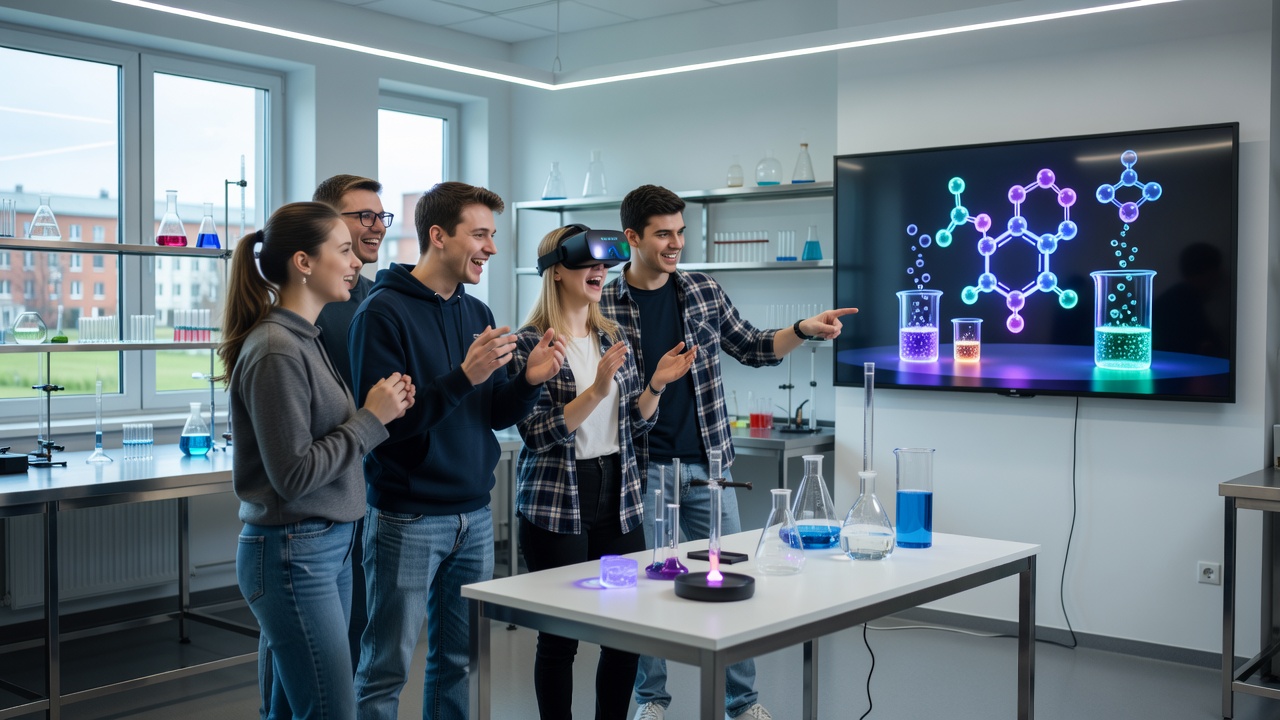
Sparklab has developed virtual reality chemistry laboratories for Polish universities to provide immersive simulations of chemical experiments. The system enables students to perform reactions in a controlled digital space without handling physical substances or equipment.
Core Capabilities and Integration
Simulations cover standard procedures including titrations, distillation, and molecular modeling. Students use headsets and motion controllers to measure volumes, adjust temperatures, and observe molecular interactions in real time. Built-in safety features prevent invalid actions while logging every step for instructor review. Early tests at partner institutions indicated higher retention rates for reaction mechanisms compared with traditional bench work. The software aligns with national curriculum standards and supports multiple languages including Polish. Universities can deploy the labs on existing VR hardware or through Sparklab-supplied kits that include tracking sensors and calibration tools.
Faculty training modules explain how to incorporate the virtual sessions into lectures and assessment rubrics. Remote access allows students at smaller regional universities to join synchronized lab groups hosted by larger centers. Data analytics track individual performance and highlight common conceptual errors for targeted remediation.
Broader Educational and Economic Effects
Adoption is projected to reduce annual laboratory operating costs by limiting purchases of reagents and replacement glassware. Physical lab time can then focus on advanced techniques that still require hands-on practice. The platform also supports collaborative experiments across institutions, fostering inter-university research projects at the undergraduate level. Sparklab continues to update the simulation library based on user feedback and new research findings in chemistry education. Government education grants have supported initial rollout at five pilot sites, with expansion planned to additional public universities over the next two academic years. This approach maintains rigorous scientific standards while increasing accessibility for students who face geographic or resource constraints.