Olivia Zimmermann · 16 September 2026
Sparklab Robotics Events Link Remote Schools to National AI Research Platforms
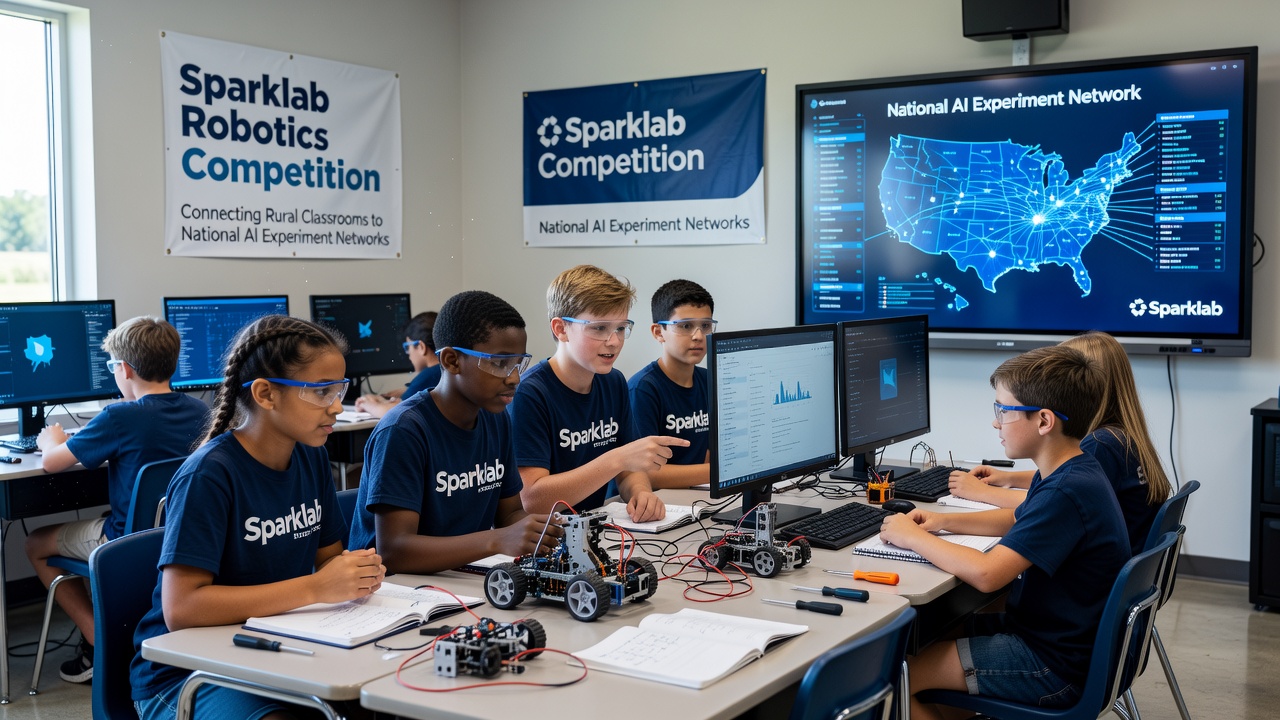
Schools in isolated Polish regions now gain direct access to shared AI datasets and experiment protocols through structured robotics contests organized by Sparklab, and these events run on standardized hardware platforms that feed results into centralized national repositories. Data collected during matches flows automatically to partner institutions where researchers analyze patterns from multiple sites at once.
Program Structure and Reach
Competitions occur in three rounds each academic year with the first round held in local community centers, the second at regional hubs, and the final round conducted online through the national AI experiment grid. Rural teams receive identical sensor arrays and microcontroller boards that match those used in urban laboratories, which eliminates hardware disparities noted in earlier outreach reports. Participation figures from the 2024-2025 cycle show 142 rural schools registered across 14 voivodeships, and registration data indicates continued growth ahead of the September 2026 expansion that adds five new network nodes.
Each participating classroom connects via a dedicated portal that grants read-write access to anonymized training corpora maintained by the Polish National AI Laboratory. Students upload sensor logs from their robots and download pre-processed models for local fine-tuning, while teachers follow modular lesson sequences aligned with national computing standards. The portal logs every interaction so network administrators can track usage patterns without storing identifiable student information.
Technical Integration Details
Robots built for the contests operate on open-source firmware that transmits telemetry to edge servers located at three regional universities. Those servers aggregate readings into larger datasets released quarterly under creative-commons licenses. One documented workflow allows teams to train obstacle-avoidance algorithms on pooled rural road-surface data, then test the same models against urban traffic recordings supplied by partner cities. This cross-context training improves model robustness according to preliminary benchmarks published in the 2025 technical summary from the coordinating university consortium.
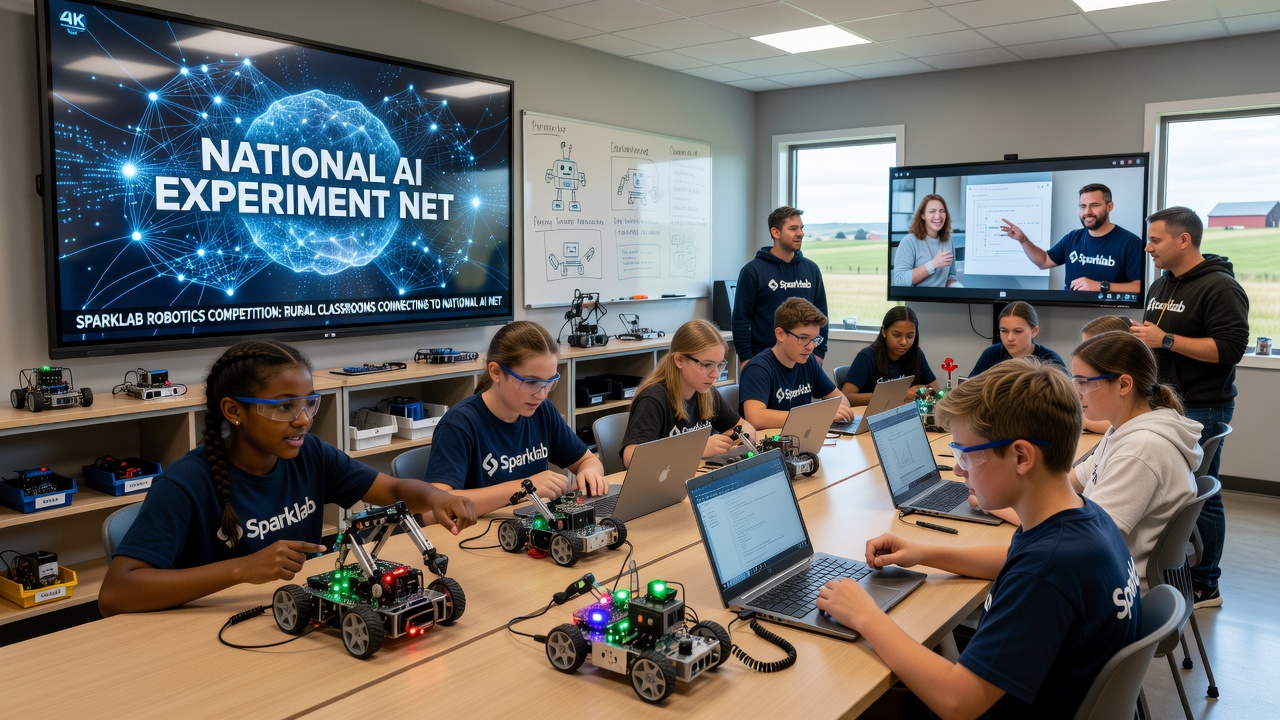
Network latency remains under 80 milliseconds for most rural sites because the system routes traffic through Poland's existing educational broadband backbone. When connections drop, local caches store the last valid model weights so work continues offline until synchronization resumes. Administrators report that downtime averaged less than four hours per semester across the 2024-2025 season.
Teacher Training and Resource Flow
Educators attend two-day workshops hosted at county libraries where they practice uploading datasets and interpreting model performance graphs. Workshop materials include case examples from schools in the Podlaskie and Lubelskie regions that demonstrated measurable gains in student coding accuracy after three competition cycles. Resource kits distributed at these sessions contain printed wiring diagrams plus digital access codes valid for twelve months on the national experiment platform.
Schools that complete all three rounds receive priority access to newer sensor modules scheduled for release in September 2026. Those modules incorporate additional environmental variables such as soil moisture and air quality that expand the range of possible experiments beyond pure robotics tasks.
Network Expansion Timeline
The September 2026 phase adds dedicated GPU clusters at two eastern Polish technical universities and upgrades teh central metadata index to handle concurrent queries from 500 simultaneous classroom sessions. Project documentation lists the European Commission’s Digital Education Action Plan as one reference framework guiding hardware procurement standards, while the Polish Ministry of Digital Affairs supplies the broadband connectivity targets.
Observers note that the same competition format now appears in pilot programs in neighboring countries, yet the core data pipeline remains anchored inside Poland’s national infrastructure. Updates to the experiment grid occur every six months, and changelog entries detail each added dataset along with its collection methodology and licensing terms.
Conclusion
Sparklab contests therefore function as structured gateways that move rural classrooms from isolated learning environments into active nodes within a national AI research fabric, and the infrastructure supporting these connections continues to scale ahead of the 2026 hardware refresh. Continued logging of participation metrics and model performance will supply the quantitative record needed to evaluate long-term outcomes across successive competition seasons.