Olivia Zimmermann · 14 October 2026
Digital Platforms Fuel Growth of Student-Led Research Networks Across European Classrooms
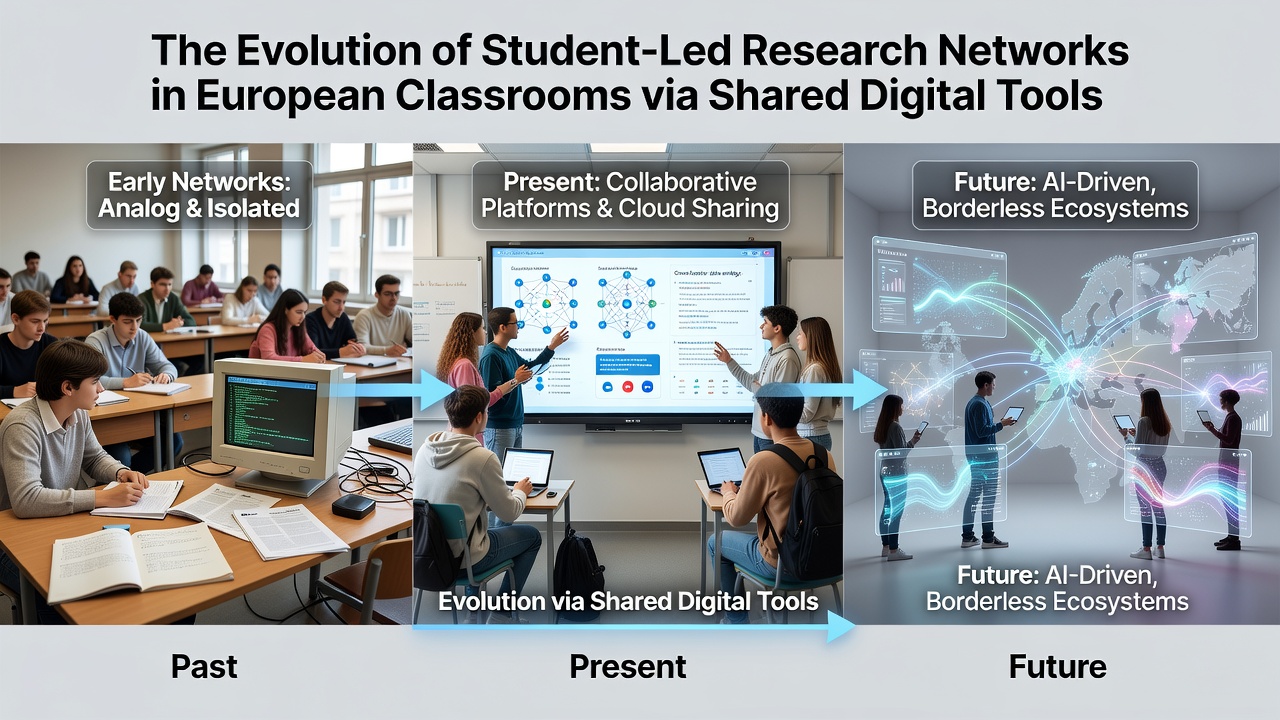
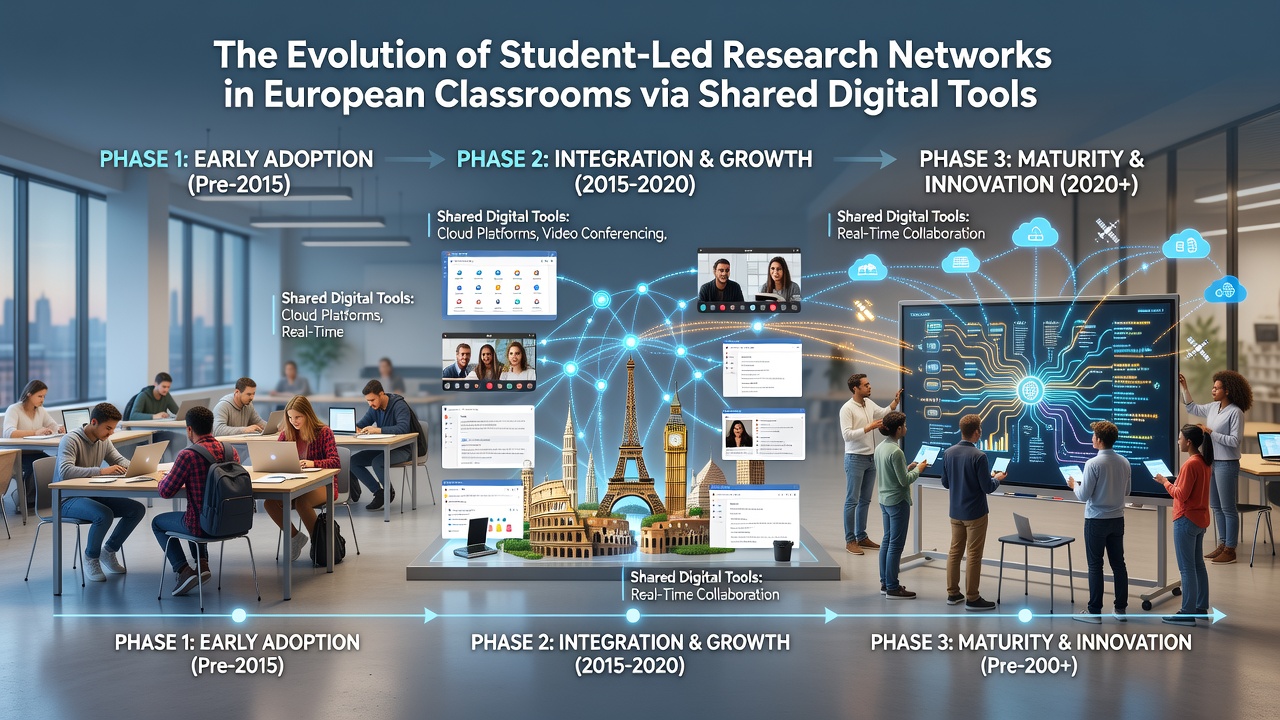
Shared digital tools have reshaped how students across Europe form and sustain research networks, and the shift began gaining momentum in the early 2010s as platforms for real-time collaboration became widely available in schools. Teachers and administrators introduced these systems to support joint data collection, analysis, and reporting, while students quickly adapted them to connect with peers in neighboring countries and beyond. The result has been a steady expansion of student-initiated projects that rely on cloud-based document sharing, synchronized databases, and video conferencing to coordinate experiments and surveys without requiring physical travel.
Early Adoption of Collaboration Software
Schools in Finland and the Netherlands started integrating tools such as shared spreadsheets and online whiteboards into science and history curricula around 2012, and similar patterns appeared soon after in France and Poland. Students used these resources to pool observations from local environmental studies, then compared results with classes in other regions through structured online forums. European Commission reports on digital education note that participation in cross-border student projects rose from roughly 15 percent of secondary schools in 2015 to over 45 percent by 2022, driven largely by the availability of free or low-cost platforms that required minimal technical setup.
One project in 2018 involved secondary students in Spain and Sweden tracking urban biodiversity using a common mobile app for photo uploads and species identification, and the network continued operating for three years with new cohorts adding data each semester. Those early efforts demonstrated that students could maintain research continuity across academic years when digital archives remained accessible to successive groups.
Key Tools and Their Spread
Platforms such as Microsoft Teams for Education and Google Workspace for Education became standard in many national systems because they allowed simultaneous editing of research reports alongside integrated chat functions for quick clarification of methods. Teachers reported that students often initiated additional channels for specific sub-topics, such as statistical modeling or literature reviews, once the basic infrastructure was in place. Data from the European Schoolnet network shows that more than 60 percent of participating schools had adopted at least one shared workspace tool by 2024, with usage rates highest in science and social studies classes.
Researchers at the University of Helsinki documented how these tools reduced coordination time for multinational student teams by an average of 35 percent compared with email-only exchanges, according to a 2023 study of 120 classrooms. The same study found that students who maintained shared digital repositories produced final reports with higher rates of cited sources and clearer methodology sections than peers working in isolation.
Expansion Through EU-Funded Initiatives
Funding programs under Erasmus+ and the eTwinning platform supplied structured templates and moderation guidelines that helped new networks form without duplicating existing work. In October 2026, the European Commission released updated statistics indicating that over 180,000 student-led research exchanges had been registered through eTwinning since 2020, with topics ranging from climate data analysis to comparative studies of historical migration patterns. These figures reflect a shift toward student ownership, as many projects now begin with proposals drafted entirely by participants rather than assigned by instructors.
Observers note that the combination of standardized digital interfaces and multilingual translation features lowered language barriers that previously limited participation from eastern and southern European countries. Students in Romania and Greece, for example, joined ongoing climate monitoring networks originally started in Germany and Denmark, adding regional datasets that enriched overall findings.
Current Practices and Outcomes
By 2026, many networks operate with minimal adult oversight once initial connections are established, and students handle peer review cycles, data validation, and presentation scheduling through built-in platform features. Case examples include a network of 14 schools in eight countries that has collected three years of water quality measurements using calibrated sensors linked to a central dashboard, and another group focused on linguistic diversity that compiles oral history recordings with synchronized transcription tools. These projects produce open datasets that subsequent student cohorts can access and extend.
National education ministries in several countries now include digital collaboration competencies in assessment frameworks, recognizing that students who navigate shared research environments develop skills in version control, citation management, and conflict resolution during joint editing sessions. Figures from OECD education indicators released in early 2026 place European secondary students ahead of global averages in reported frequency of cross-classroom digital projects.
Conclusion
The evolution of these networks continues as new features such as integrated AI-assisted data cleaning and automated citation suggestions appear in classroom platforms. Students maintain the core practice of proposing questions, gathering evidence across borders, and publishing findings through the same shared digital environments that first enabled the trend. As participation metrics keep rising, the infrastructure supports increasingly complex, multi-year inquiries that span entire school careers.